
The short answer
Pain and inflammation often turn up together, which is why they get treated as one thing, but they are not the same.
Inflammation is the body's response to injury or irritation. It is a process, and it often shows up as heat, swelling, redness or stiffness. Pain is a signal your nervous system produces, and it can be present with or without visible inflammation.
You can have inflammation with very little pain, such as morning stiffness that eases as you move, and you can have real pain with no swelling at all, such as nerve pain. Knowing which one you are dealing with changes what tends to help.
Pain and inflammation are often treated as if they’re the same thing, but they’re not.
It’s easy to see why the two get confused. Swelling, redness, stiffness, soreness, they tend to show up together. So the assumption becomes: reduce inflammation, and the pain will disappear.
This is one of the most common misconceptions in everyday health. Pain and inflammation are not interchangeable, and one doesn’t always cause the other. They’re two distinct processes that sometimes overlap, sometimes don’t, and understanding the difference can completely change how you approach recovery and relief.
Pain and Inflammation: Two Different Things
Inflammation
Let's start with inflammation. Inflammation is your body's immune response to injury, infection, or irritation. When you roll your ankle, slice your finger, or develop an infection, your immune system sends white blood cells and healing chemicals to the area. You might notice redness, swelling, heat, or a tender sensation, those are all signs that your body's repair crew is on the job.
In the short term, this is actually a good thing. Acute inflammation is a vital part of healing. It isolates the damaged area, fights off potential infection, and begins the repair process. Without it, minor injuries wouldn't heal properly.
Pain
Pain, on the other hand, is your nervous system's way of sending a signal, a warning message from your body to your brain that says, "Something needs your attention here." Pain is processed through a network of specialised nerve fibres and pathways that run throughout your body, up your spinal cord, and into your brain where the signal is interpreted and experienced.
Here's the key distinction: inflammation can trigger pain, but pain can also exist without any inflammation at all.
When Inflammation Does Cause Pain
When inflammation is present, it often causes pain because the swelling and chemical signals released at the injury site directly stimulate pain receptors (called nociceptors) in your tissues. These receptors pick up on changes; pressure, temperature, chemical irritants, and send messages up the nervous system.
This is why a sprained ankle throbs and aches. It's also why inflammatory conditions like arthritis, tendinitis, or bursitis produce pain that correlates with flare-ups. The inflammation is an active, measurable part of what's happening in the body, and treating it (with rest, cold therapy, anti-inflammatories, or topical support) often brings real relief.
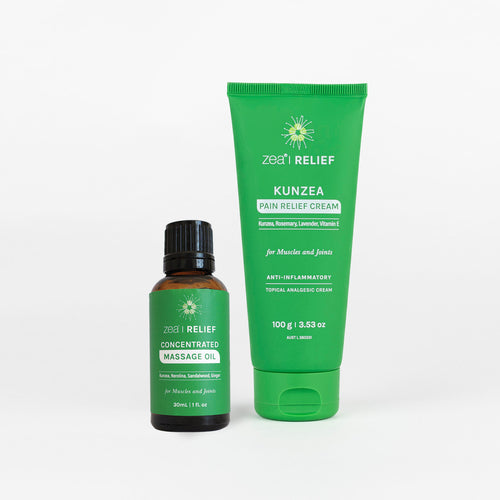
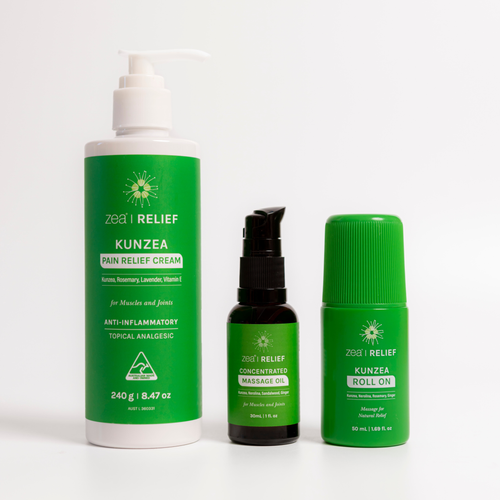
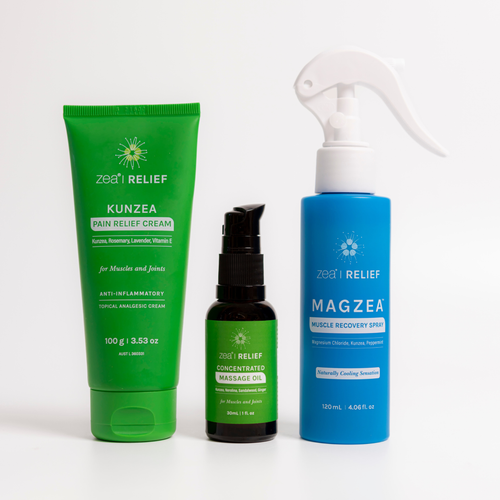
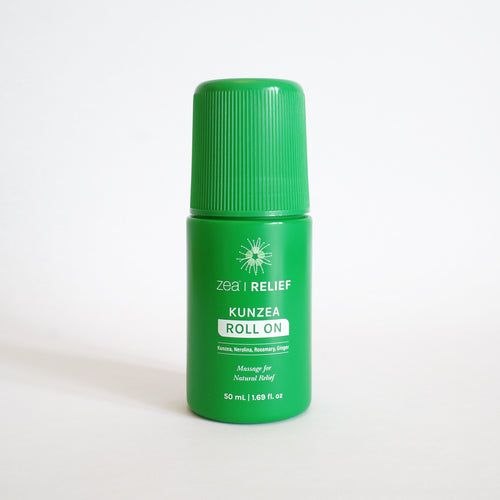
With this type of pain, the root cause is at the site. Addressing local inflammation, reducing swelling, improving circulation, easing muscle tension around the affected area, can genuinely shift the experience of pain. This is where targeted topical support plays a distinct role. The Kunzea Pain Relief Cream is a natural anti-inflammatory that works at both levels - it can help calm inflammatory responses in the tissue while also interacting with local nerve pathways, which is why it can meaningfully reduce pain when inflammation is driving it.

When Pain Has Nothing to Do With Inflammation
Now here's where it gets interesting, and where a lot of people feel misunderstood or frustrated with conventional approaches.
Sometimes pain is very real and very intense, but there's no detectable inflammation. No swelling. No damaged tissue. No obvious injury. Yet the pain persists, or flares up seemingly out of nowhere. This kind of pain is driven not by the body's immune response, but by changes in the nervous system itself.
One of the most well-researched explanations for this is something called central sensitisation. This is where the nervous system essentially becomes "turned up" - more sensitive than it needs to be, amplifying pain signals even when there's no active threat in the tissue. Think of it like a fire alarm that keeps going off even when there's no fire.
In central sensitisation, the brain and spinal cord become more reactive over time. Pain thresholds lower. Sensations that wouldn't normally hurt such as light touch, temperature changes, even gentle pressure, can become uncomfortable or painful. This is why conditions like fibromyalgia, chronic lower back pain, or persistent headaches can be so hard to treat with standard anti-inflammatory approaches alone.
A really relatable example of this? Delayed onset muscle soreness or DOMS. That deep, heavy ache you feel in your legs one or two days after a hard workout or a long hike. For years, people attributed DOMS to lactic acid build-up, but research has largely moved away from that explanation. The current understanding points more to micro-damage in muscle fibres and a sensitised nervous system response, not a significant inflammatory process. Yet the pain is very real. That's the nervous system doing its job, signalling that the tissue needs rest and recovery, without major inflammation being the driver.
Understanding Your Pain Pathways
Your pain system is remarkably complex. Here's a simplified version of how it works:
• Peripheral sensitisation: Nociceptors (pain receptors) in your tissues become more sensitive due to local damage or inflammation. Your body's way of protecting an injured area while it heals.
• Spinal cord processing: Pain signals travel via nerve fibres to the spinal cord, where they can be amplified or dampened before reaching the brain.
• Central sensitisation: When under prolonged stress or repeated pain signals, the brain and spinal cord can become hypersensitive, producing pain that outlasts the original injury or exists without any apparent cause.
• The brain's interpretation: The brain doesn't just passively receive pain signals, it actively interprets them based on context, past experiences, stress levels, sleep quality, and emotional state. This is why the same injury can feel very different depending on how rested, anxious, or supported you feel.

This is also why chronic stress has such a significant impact on pain. When the nervous system is under sustained stress, whether from work pressure, poor sleep, emotional strain, or simply being in a constant state of alertness, it stays in a heightened, reactive mode. Pain thresholds lower. The body becomes more sensitive. Things that might have been mildly uncomfortable before become genuinely painful. If you've ever noticed your pain feels worse during a stressful period, this is exactly why, and it's completely valid. It's not weakness or imagination; it's your nervous system responding to the total load it's carrying.
Understanding this doesn't mean the pain is "all in your head." It means the experience of pain is far more than a simple signal from damaged tissue, it's a whole-body, whole-system process.
The Interplay: Inflammation, Circulation and Muscle Tension
Even when central sensitisation is at play, the body's local environment still matters. There's often a dynamic interplay happening at the site of discomfort, even if the pain itself is being amplified centrally.
Local inflammation causes tissue swelling, which can compress nearby nerves, reduce blood flow, and trigger secondary muscle tension as surrounding muscles try to protect the area. Poor circulation then slows the delivery of oxygen and nutrients that help resolve inflammation and repair tissue. Muscle tension, in turn, creates its own pressure on nerve endings and reduces mobility.
So while inflammation might not always be the cause of pain, reducing localised inflammation, improving circulation to the area, and easing muscle tension can all contribute meaningfully to pain relief, even in people whose pain has a central component.
This is why topical support remains a valuable tool for many people, even those dealing with chronic or complex pain patterns. Working at the site, gently encouraging circulation, reducing local inflammation, and relaxing muscle guarding, creates a more favourable environment for the nervous system to calm down and recalibrate.
Supporting Your Body: Practical Recovery Tools
Whether you're dealing with post-exercise soreness, a recurring joint ache, or a body that feels more sensitive than it should, there are several layers of support worth considering:
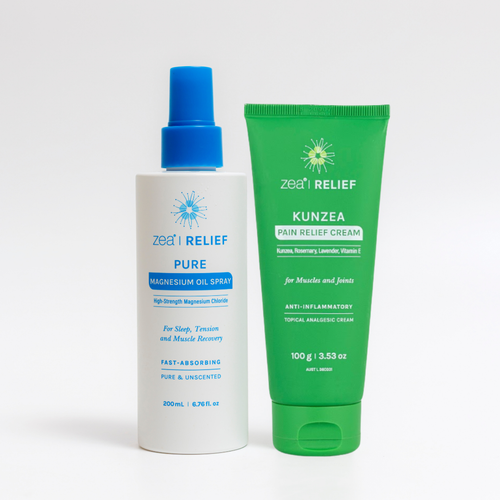
• Movement - gently and consistently: Prolonged rest often worsens central sensitisation. Gentle movement keeps circulation flowing, maintains joint health, and sends reassuring signals to the nervous system that movement is safe. Pairing movement with topical support like a magnesium oil can further assist muscle function and relaxation, helping reduce tightness and post-activity discomfort.
• Cold and heat therapy: Cold reduces acute inflammation and numbs localised pain. Heat relaxes muscle tension, promotes blood flow, and soothes the nervous system. Alternating both can be especially effective in the recovery phase. A dual-action lupin heat pack allows you to use both approaches in one, applying cold during acute flare-ups, then switching to heat to support recovery and muscle relaxation.
• Stress and sleep management: The nervous system's sensitivity is closely tied to overall stress load and sleep quality. Consistently poor sleep amplifies pain perception, addressing it directly supports recovery in ways topical products alone can't.
• Breath work and relaxation: Slowing the breath activates the parasympathetic nervous system ("rest and digest"), which can genuinely reduce pain signalling. Even a few minutes of diaphragmatic breathing can shift the body's threat response.
• Topical support at the site: Applying targeted, natural support directly to the area of discomfort can address both inflammation and local nerve activity. Kunzea Pain Relief Cream is formulated to help calm inflammatory responses and reduce pain, while also interacting with peripheral pain pathways, making it particularly effective for joint and muscular discomfort. The Kunzea Concentrated Massage Oil combines Kunzea with ingredients like Ginger, which helps stimulate circulation and deliver warmth to the area, alongside other botanicals that support muscle relaxation and recovery. Together, these types of formulations work beyond surface-level relief, helping reduce swelling, ease tension, and modulate how pain is felt at the source, without the systemic side effects associated with oral medications.

When to see a professional
While self-care tools and topical support can make a meaningful difference for everyday aches, muscle soreness, and mild inflammatory flare-ups, it's important to know when to seek professional guidance. If your pain is severe, getting progressively worse, disrupting your sleep or daily function, or has no clear cause, speak to your doctor or a qualified health practitioner. Pain that persists beyond a few weeks, or that comes with other symptoms like swelling, numbness, or tingling, always warrants a professional assessment. The information in this article is educational and not a substitute for personalised medical advice.
The Takeaway
Pain and inflammation are not the same thing.
Inflammation is an immune response; pain is a nervous system signal.
They often coexist, but one doesn't always require the other.
When you understand this, you can approach discomfort with more clarity, knowing when to focus on reducing localised inflammation, when to support nervous system sensitivity, and when to use tools that address both. That nuance isn't just interesting from a science perspective. It can genuinely change how you manage your body and what recovery looks like for you.
References
-
Apkarian, A. V., Bushnell, M. C., Treede, R.-D., & Zubieta, J.-K. (2005). Human brain mechanisms of pain perception and regulation in health and disease. European Journal of Pain, 9(4), 463-484. https://doi.org/10.1016/j.ejpain.2004.11.001
-
Basbaum, A. I., Bautista, D. M., Scherrer, G., & Julius, D. (2009). Cellular and molecular mechanisms of pain. Cell, 139(2), 267-284. https://doi.org/10.1016/j.cell.2009.09.028
-
Blyth, F. M., Briggs, A. M., Huckel Schneider, C., Hoy, D. G., & March, L. M. (2019). The global burden of musculoskeletal pain—Where to from here? American Journal of Public Health, 109(1), 35-40. https://doi.org/10.2105/AJPH.2018.304747
-
Meeus, M., & Nijs, J. (2007). Central sensitization: A biopsychosocial explanation for chronic widespread pain in patients with fibromyalgia and chronic fatigue syndrome. Clinical Rheumatology, 26(4), 465-473. https://doi.org/10.1007/s10067-006-0433-9
-
Nijs, J., Apeldoorn, A., Hallegraeff, H., Clark, J., Smeets, R., Malfliet, A., Girbes, E. L., De Kooning, M., & Ickmans, K. (2015). Low back pain: guidelines for the clinical classification of predominant neuropathic, nociceptive, or central sensitization pain. Pain physician, 18(3), E333–E346.
-
Woolf, C. J. (2011). Central sensitization: Implications for the diagnosis and treatment of pain. Pain, 152(3 Suppl), S2–S15. https://doi.org/10.1016/j.pain.2010.09.030


![Kunzea Pain Relief Cream [Value Pack]](http://www.zeaaustralia.cn/cdn/shop/files/Neutral_Images_Website_1080_x_1080_12_aeeb7fb5-6b18-4315-99ea-c7a97403e37a.png?v=1776732033&width=500)


