Four ingredients, if you count the sugar. Shortbread has nowhere to hide a mistake and nowhere to hide a shortcut, which is exactly why it is the most honest test of a spice you will ever bake.
Put something dull in it and you will taste dull butter. Put two Australian native leaves in it and you get a biscuit that people pick up, pause over, and then ask about.
Why shortbread suits a native leaf
Butter is a carrier. Fat holds aromatic compounds and releases them slowly as it warms in your mouth, which is why a rich, plain dough shows off a fragrant leaf far better than a cake full of competing flavours does.
Shortbread also bakes low and slow. Nothing scorches, nothing turns bitter, and the aromatics stay intact instead of cooking off. It is a gentle environment, and native leaves reward gentle treatment.
The two leaves
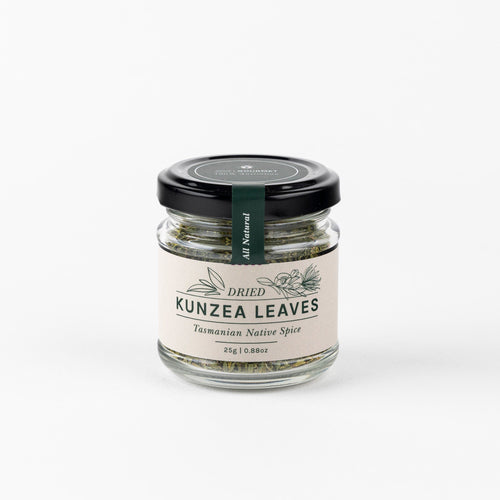
Kunzea grows wild across the coastal country of Tasmania. Dried and crushed, it smells like eucalyptus and citrus with a sweet honeyed note underneath, and it tastes softer than it smells: warm, faintly resinous, somewhere between rosemary and native thyme.
Worth knowing what you are looking for. Our Dried Kunzea Leaf is very fine and short, closer to dried thyme than to a bay leaf, in a bright olive green. If yours looks like broad flat flakes, it is something else.

Lemon Myrtle does the opposite job. Where Kunzea is warm and resinous, Lemon Myrtle is sharp, clean and unmistakably citrus, with more lift than lemon zest and none of the acidity. A teaspoon and a half is enough to brighten the whole batch without turning it into a lemon biscuit.
One thing to get right: use the ground dried leaf, which bushfood and native ingredient suppliers stock. Essential oils are made for aromatherapy, not for cooking, so always use the ground dried spices in recipes.
Getting the texture right
Shortbread lives or dies on texture, and three things decide it.
- Rice flour is not optional. It has no gluten, so it interrupts the structure that plain flour builds and gives you that sandy, crumbling snap. Swap it out and you get a biscuit that bends instead of breaks.
- Butter should be cool-room soft. Soft enough to take an indent, not greasy. Warm butter means the dough spreads in the oven and the edges lose their definition.
- Chill before baking, not after mixing. Cut your shapes first, then refrigerate them on the tray. Cold dough holds its edges, and the fork holes stay crisp instead of closing over.
Kunzea and Lemon Myrtle shortbread
Makes about 30 squares
Prep 20 minutes, plus 30 minutes chilling
Cook 16 minutes
Ingredients
- 250g salted butter, softened
- ⅓ cup (75g) caster sugar
- 1 tablespoon water
- 2 cups (300g) plain flour
- ½ cup (80g) rice flour
- 2 teaspoons Dried Kunzea Leaf, finely crushed
- 1½ teaspoons ground Lemon Myrtle
Method
- Crush the Kunzea Leaf first, either in a mortar and pestle or by rubbing it between your palms. This wakes up the aromatics and stops any woody fragments standing out in a smooth crumb.
- Beat the butter and caster sugar for 3 to 4 minutes, until pale and creamy. You want it light, not whipped and airy.
- Add the water and mix briefly, just until it disappears.
- Sift both flours into a separate bowl, then stir the crushed Kunzea and ground Lemon Myrtle through the dry mix so the spice is evenly spread before it meets the butter.
- Tip the flour into the butter and bring it together by hand. Stop the moment it forms a smooth dough, because overworking it makes tough shortbread.
- Roll between two sheets of baking paper to an even 8mm to 1cm. Even thickness is the whole game here: uneven dough gives you dark edges and a raw middle.
- Cut into 4cm squares, lift onto a lined tray, and prick each one two or three times with a fork.
- Refrigerate the tray for 30 minutes.
- Heat the oven to 160°C fan-forced (180°C conventional) and bake for 16 minutes. They should look dry and set but still pale, with barely any colour at the edges. Browned shortbread has gone past its best and the butter starts to taste toasted rather than sweet.
- Leave them on the tray for 10 minutes before moving. Warm shortbread breaks if you rush it.

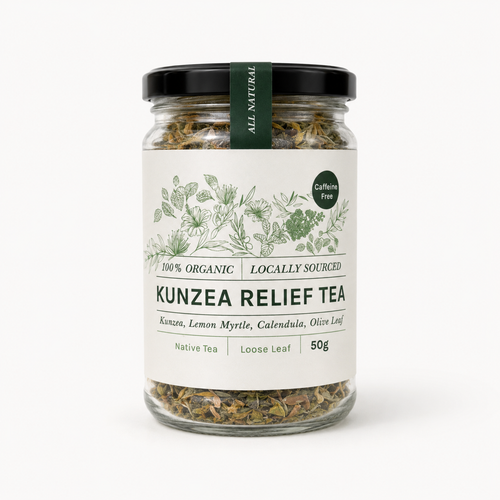
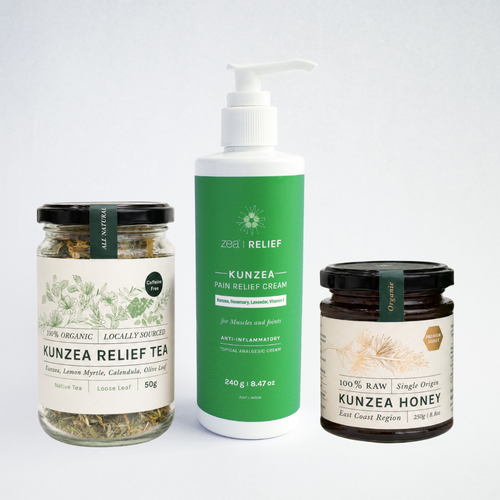
This is exactly the moment they are built for: a small stack on a plate, beside a pot of Kunzea Relief Tea on a cold afternoon.
Three ways to change it
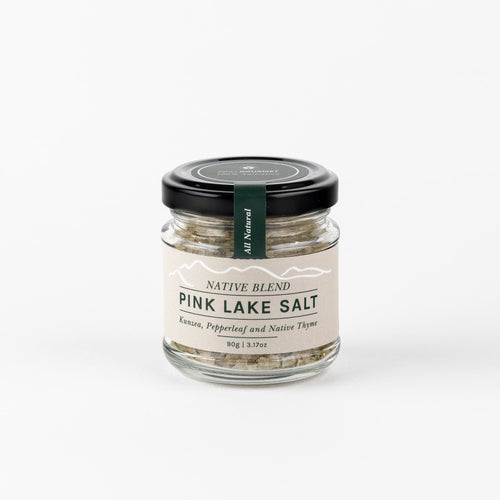
- Salted. Add ¼ teaspoon of Native Blend Pink Lake Salt, crushed a little finer, to the flour. It carries Saltbush, Mountain Pepperleaf and Kunzea, so it deepens the savoury edge rather than just making things salty. Very good with cheese.
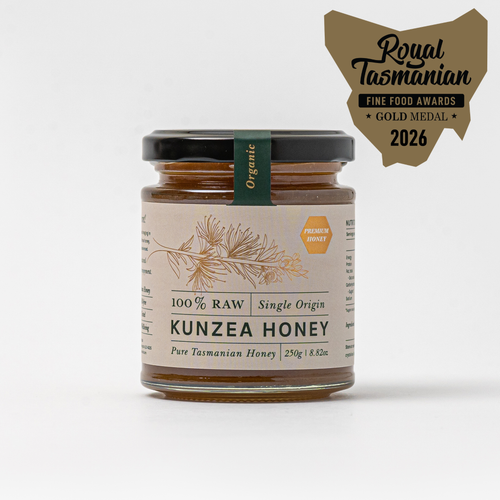
- Honeyed. Brush the warm biscuits with a thin layer of raw Kunzea Honey as they come out of the oven and let it set as they cool. The honey and the leaf come from the same plant, so the two flavours line up rather than compete.
- A different leaf entirely. The same dough takes Aniseed Myrtle, Peppermint Gum or Saltbush at the same quantity, and each sends it somewhere new. This is a good recipe to experiment in, precisely because there is so little else going on.
Making ahead and storing
The raw dough keeps wrapped in the fridge for 3 days, or frozen for 2 months. Cut the shapes before freezing and bake them straight from frozen with an extra 2 to 3 minutes.
Baked, they hold in an airtight container for up to 2 weeks and genuinely improve after a day as the spice settles through the butter. If you are boxing them as a gift, stack them with baking paper between the layers.

A Wooden Honey Dipper keeps the drizzle controlled if you are making the honeyed version above.
If this is your first go at baking with native ingredients, shortbread is a forgiving place to start. Our Dried Kunzea Leaf is wild harvested in Tasmania and will outlast a lot of batches, and the Kunzea Honey is worth having on hand for the version above. When you are ready for something with a bit more assembly, try our Native Kunzea Yoyos.