Short answer: if you are out of Epsom salt, magnesium chloride flakes are the closest swap, Dead Sea salt and Himalayan salt both work as a mineral-rich soak, and sodium bicarbonate or colloidal oatmeal cover the "just want to feel better" end of the shelf. None of them are interchangeable in a chemistry sense, and the honest answer about whether any bath additive changes your body's magnesium level is more complicated than most articles let on. Here is what each one actually is, what it is genuinely good for, and where the marketing gets ahead of the evidence.
Epsom salt vs. the alternatives, at a glance
Before going through each option in detail, here is the direct comparison. "Best for" reflects what each substance is actually suited to, not a ranking of which is "strongest."
| Alternative | What it is | Best for | Bathtub needed? |
|---|---|---|---|
| Magnesium chloride flakes | A different magnesium salt (chloride, not sulfate) | A closer soak-for-soak swap; dissolves fast | No, works in a foot soak too |
| Dead Sea salt | A concentrated mineral salt naturally rich in magnesium chloride | Dry, sensitive or itchy skin - this one has real trial data | No, works as a forearm/foot soak |
| Himalayan (pink) salt | Mostly sodium chloride with trace minerals | A warm, relaxing soak; skin feel, not magnesium | No, works as a foot soak |
| Sodium bicarbonate (baking soda) | A pantry staple, mildly alkaline in water | Softening bath water; itchy or irritated skin | No, works in a foot soak |
| Colloidal oatmeal | Finely milled oats, no magnesium content | Dry, eczema-prone or reactive skin | No, works in a foot soak |
| No bathtub at all | N/A | Shower steamers, foot soaks, a body scrub made from any of the above | No |
Why Epsom salt and magnesium flakes are not actually the same thing
This is the distinction almost nothing online explains, and it is the whole reason "which one is better" is the wrong question. Epsom salt is magnesium sulfate heptahydrate (MgSO4.7H2O), named after the mineral springs at Epsom, Surrey, where the salt was first documented in the water in the 1690s1. Magnesium flakes, by contrast, are magnesium chloride, a completely different salt that just happens to share the same magnesium ion.
The practical difference is in how each behaves once it is out of the packet. Magnesium chloride is strongly hygroscopic, meaning it pulls moisture out of the air and, left exposed, will eventually dissolve into a puddle on its own2. Magnesium sulfate is far more stable as a dry crystal, which is part of why Epsom salt keeps so well in a cupboard for years while magnesium flakes need a sealed container. Neither property tells you which one "absorbs better" through skin - that is a separate question, and the marketing around both salts tends to skip straight past it.
Magnesium chloride flakes: the closest soak-for-soak swap

If someone told you to soak in Epsom salt and you only have magnesium flakes (or vice versa), the swap is fine. Use roughly the same volume, dissolve in warm running water, and soak as you normally would. Where flakes genuinely differ is dissolution speed - the higher solubility means they disappear into the water faster, which matters more for a quick foot soak than a long bath where either salt has time to dissolve fully.
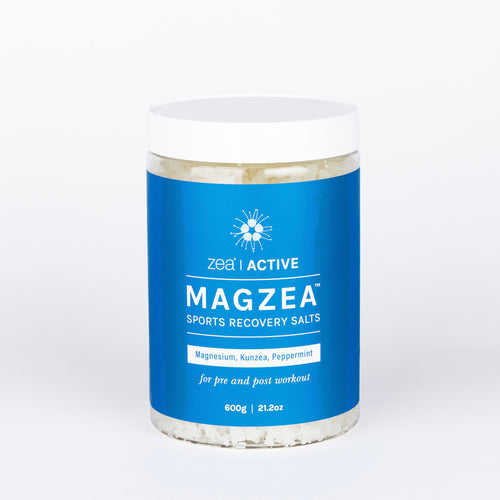
Zea's MAGZEA Muscle Recovery Salts are a magnesium chloride flake blend finished with Kunzea, Peppermint and Lemon Ironbark essential oils, built for a pre- or post-workout soak rather than a general relaxation bath. Read the ingredients on the pack and use as directed - this is a bathing product, not a supplement.
Dead Sea salt: the one alternative with real clinical data
Of every substitute on this list, Dead Sea salt has the most direct research behind it. A controlled study in the International Journal of Dermatology had people with dry, atopic-prone skin soak one forearm in a 5% Dead Sea salt solution and the other in plain tap water for 15 minutes, repeated over six weeks. The salt-treated arm showed significantly better skin barrier function, more hydration, and less roughness and redness than the water-only control3. The researchers attributed the effect to the salt's high magnesium content, most of it in chloride form, and noted that magnesium salts are known to bind water in the skin and support the outer barrier's repair process3.
That is a genuinely useful, specific finding, worth stating plainly: it is about skin barrier and hydration in a 15-minute forearm soak, not about correcting a magnesium deficiency or treating any diagnosed skin condition. It does not tell you what happens with a full-body 20-minute bath, and it is not evidence that any amount of magnesium taken up this way changes blood magnesium levels body-wide.
Himalayan (pink) salt: mostly about the soak, not the magnesium
Himalayan pink salt is overwhelmingly sodium chloride, ordinary table salt with trace minerals responsible for its colour and taste. It is a pleasant bath addition and behaves similarly to sea salt, but it is not a meaningful magnesium source, and swapping it in expecting an Epsom-salt-equivalent effect is trading on the wrong property. If the appeal is a warm, mineral-scented soak, it does that job fine.
Sodium bicarbonate and colloidal oatmeal: the sensitive-skin route
Neither of these contains magnesium at all, and that is the point - they solve a different problem. Baking soda in bath water can take the edge off itchy or irritated skin and is gentle enough for most people. Colloidal oatmeal, finely milled Avena sativa, has genuine research behind its skin-barrier effects: a laboratory and clinical study found it strengthens skin's barrier-related gene expression, buffers pH, and measurably improved dryness and moisturisation in subjects with dry skin over several weeks4. If the actual goal is calming reactive or dry skin rather than a "magnesium soak," oatmeal is arguably the better-evidenced choice of the two.
Does magnesium actually absorb through the skin? The honest answer
This is the question every Epsom-salt-substitute article avoids, because the honest answer undercuts the sales pitch. A widely cited review examining the claims behind transdermal ("through the skin") magnesium concluded that the evidence for meaningful absorption is limited, inconsistent, and not yet proven to a scientific standard, and the authors stated they could not recommend transdermal magnesium application on the evidence available5. The same review explains why: intact skin is an effective barrier to charged mineral ions, and the routes that could let magnesium through, hair follicles and sweat glands, make up only around 0.1% to 1% of the skin's surface area5.
What that means in practice: a bath with any magnesium salt, Epsom, chloride flakes or Dead Sea salt, is very unlikely to shift your overall body magnesium level in any way you could measure with a blood test. What it can plausibly do is affect the skin itself directly, the way the Dead Sea salt trial above measured, because that effect does not require the magnesium to travel any further than the outer skin layer. If someone is soaking hoping to "fix a magnesium deficiency," a bath is the wrong tool - that is a conversation for a GP and a blood test, not a bath salt.
No bathtub? Here is what actually works
None of the above requires a bathtub. Dissolve any of these salts into a large basin for a foot soak, or use them as a body scrub in the shower - Zea has a full walkthrough of five bath-free ways to use bath salts, including shower steamer methods and scrub recipes, in 5 Easy and Bath-Free Ways to Use Bath Salts. If steam rather than soaking is the goal, a dedicated shower steamer dissolves on the shower floor and releases essential oils into the steam without needing any salt dissolved in standing water at all.
Where Zea's bath salts fit

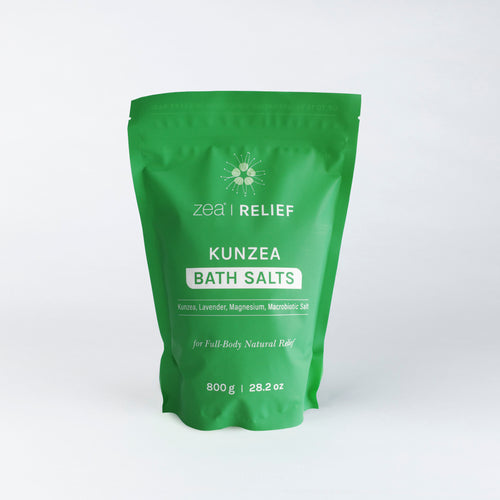
Kunzea Bath Salts use Macrobiotic Sea Salt from the Great Barrier Reef blended with Kunzea, Lavender and Ylang Ylang essential oils, built as a relaxing, everyday soak rather than a magnesium-dosing exercise - which, per the evidence above, no bath salt genuinely is. For a more targeted pre- or post-exercise soak, the magnesium chloride flake formula in MAGZEA Muscle Recovery Salts is the better fit. Both are cosmetic bathing products, not therapeutic goods, and neither is intended to treat a diagnosed medical condition.
For a magnesium routine outside the bath, Zea's Magnesium Oil Spray is a topical, leave-on option, and the full Magnesium range covers other formats. For more on how magnesium is generally used and what the current evidence says, see Benefits and Uses of Magnesium.
Frequently asked questions
Is magnesium chloride better than Epsom salt?
Not better, different. Magnesium chloride (flakes) dissolves faster and more completely than magnesium sulfate (Epsom salt), but the evidence that either one meaningfully raises body magnesium through skin contact is weak. Choose based on what you have on hand or which scent/formula you prefer.
Can I use table salt instead of Epsom salt?
You can add ordinary table salt to bath water for a similar warm-soak feel, but it contains essentially no magnesium, so it will not replicate anything magnesium-specific about an Epsom soak. Himalayan pink salt is the closest sodium-chloride-based option with added trace minerals.
What can I use if I do not have a bathtub?
Any of the salts above work in a foot soak, hand soak, or as a body scrub in the shower. See 5 Easy and Bath-Free Ways to Use Bath Salts for specific methods, or use a shower steamer instead.
Does magnesium actually absorb through skin?
The current scientific evidence is limited and contested. Intact skin appears to let through only a very small fraction of applied magnesium, though disrupted or compromised skin (grazes, eczema, shaving irritation) may allow more through. A leading review on the topic concluded it could not yet recommend transdermal magnesium on the evidence available5.
Is Himalayan pink salt the same as Epsom salt?
No. Himalayan pink salt is sodium chloride (table salt) with trace minerals. Epsom salt is magnesium sulfate. They are chemically unrelated beyond both being "salts," and Himalayan salt does not provide a comparable magnesium dose.
How much salt goes in a bath?
Product directions vary by brand and concentration, so check the pack. As a general guide, most bath salt products are designed around one to two cups dissolved in a full bath of warm water; follow the specific product's instructions rather than a generic rule.
Can you use bath salts every day?
Most people tolerate an occasional or few-times-weekly soak well. Daily soaking in any mineral salt can be drying for some skin types, so if skin feels tight or irritated afterwards, space out the soaks or switch to a gentler option like colloidal oatmeal.
References
Sources open in a new tab so you do not lose your place.
- 1. University of Waterloo, Wat on Earth. Epsom Salts. View source
- 2. USDA Agricultural Marketing Service. Magnesium Chloride Technical Report (National List petitioned substance review), 2016. View source
- 3. Proksch E, Nissen HP, Bremgartner M, Urquhart C. Bathing in a magnesium-rich Dead Sea salt solution improves skin barrier function, enhances skin hydration, and reduces inflammation in atopic dry skin. International Journal of Dermatology, 2005. View source
- 4. Ilnytska O, Kaur S, Chon S, Reynertson KA, et al. Colloidal Oatmeal (Avena Sativa) Improves Skin Barrier Through Multi-Therapy Activity. Journal of Drugs in Dermatology, 2016. View source
- 5. Gröber U, Werner T, Vormann J, Kisters K. Myth or Reality-Transdermal Magnesium? Nutrients / PMC, 2017. View source