If you've ever compared a pharmacy shelf to a health food aisle, you've probably noticed the labels don't match. One box says AUST R. Another says AUST L. A jar of body butter next to it says neither. All three might be sitting within arm's reach of each other, and all three mean something genuinely different - not just in wording, but in how much checking the product went through before it was allowed to be sold at all.
This matters more than it looks, because the difference isn't really about strength or quality. It's about who has assessed the evidence behind the claim on the label, and how far that claim is legally allowed to go. Get it wrong and you can end up trusting a cosmetic to do a medicine's job, or assuming a listed medicine has been through the same evaluation as a registered one when it hasn't. Here's what each category actually means, using two of our own products as the worked examples - one on each side of the line.
Three tiers, not two
Australia's therapeutic goods regulator, the Therapeutic Goods Administration (TGA), sorts external-use and oral products into a small number of risk-based categories, all recorded on the Australian Register of Therapeutic Goods (ARTG). For a topical cream, oil, spray or supplement, there are three tiers that matter to an everyday shopper:
- Cosmetic - not a therapeutic good at all. Regulated for ingredient safety, but not permitted to carry a therapeutic claim.
- Listed medicine (AUST L) - a therapeutic good using only pre-approved low-risk ingredients and pre-approved wording for what it may claim to do. Not individually assessed by the TGA before sale.
- Registered medicine (AUST R) - a therapeutic good that has gone through full TGA pre-market evaluation of its safety, quality and efficacy before it can be sold.
There's also a fourth, less common tier - the assessed listed medicine (AUST L(A)) - sitting between listed and registered. It uses the same low-risk ingredient rules as a listed medicine, but its efficacy evidence for at least one claim has actually been assessed by the TGA before market entry, which a plain listed medicine's has not. Most complementary medicines on Australian shelves are either plain listed (AUST L) or fully registered (AUST R), so those are the two we'll compare in detail.
What "cosmetic" actually means
A cosmetic in Australia is defined by what it's for, not by how it's marketed. The TGA's own guidance on the boundary between the two categories puts it plainly: cosmetics "are typically used to change the body's odour or appearance, cleanse it, keep it in good condition or protect it," while "therapeutic goods are for a therapeutic use."1 Cosmetic ingredients fall under a separate system entirely - the Australian Industrial Chemicals Introduction Scheme (AICIS) - rather than the ARTG.1
That's not a lesser category, and it isn't a loophole either. A well-formulated cosmetic can genuinely improve how skin looks and feels, and can be a completely honest, useful product. What it can't do - by law, not by choice - is claim to treat, relieve or manage a medical symptom. The moment a claim crosses from "moisturises skin" to "relieves pain," the product needs to be entered on the ARTG as a therapeutic good, or the claim needs to come off the label.
What "listed medicine" (AUST L) actually means - and the one fact almost nobody states clearly
An AUST L number means a product is registered with the ARTG as a listed medicine. To get there, a sponsor (the company that owns the product) can only use ingredients drawn from the TGA's Permissible Ingredients Determination, and can only make claims drawn from its Permissible Indications Determination - there's no free choice of wording, and no ability to invent a claim the TGA hasn't already pre-approved as low risk.
Here is the fact that gets flattened almost everywhere this topic comes up, including in a lot of well-meaning marketing copy: a listed medicine is not individually evaluated by the TGA for efficacy before it goes on sale. The TGA's own guidance states this without hedging: "Listed medicines are not individually evaluated by the TGA for quality, safety and efficacy before they are supplied in the marketplace. Instead, sponsors (product owners) certify that their listed medicine meets requirements in relation to safety, quality and efficacy."2 The efficacy evidence exists, and it's a genuine legal requirement to hold it - "it is an offense for a sponsor to certify that a listed medicine is safe, is of good quality and works as intended when it is not"2 - but it sits with the sponsor, not in a TGA pre-market review.
This is exactly why "TGA listed" and "TGA approved" are both wrong things to say about a listed medicine, and why we don't use either phrase about our own products. Neither phrase reflects what actually happened before the product reached a shelf. The accurate description is that a product is registered with the ARTG as a listed medicine, with its own AUST L number. That's a real, legally meaningful status - low-risk ingredients, pre-approved claim wording, a sponsor legally on the hook for the evidence behind it - it's just not the same thing as a TGA efficacy assessment, and saying "TGA listed" implies one happened when it didn't.
What "registered medicine" (AUST R) actually means
A registered complementary medicine is a different proposition entirely. The TGA describes it directly: "Registered complementary medicines have undergone a full TGA pre-market evaluation of their safety, quality, and efficacy before being supplied in the marketplace."3 These products carry an AUST R number, and because the evidence has actually been reviewed and accepted by the regulator before sale, only registered (and assessed listed) medicines are entitled to carry the "TGA assessed claim" on their labelling and advertising.3
Registration is reserved for medicines with higher-risk ingredients or claims about more serious conditions - things like general sales medicines for fibre supplementation, or pharmacy-only high-dose iron and vitamin D products.3 A topical anti-inflammatory containing a pharmaceutical active such as diclofenac, for example, is the kind of product that sits in this registered tier: a therapeutic effect the TGA has actually reviewed before allowing the claim on the box.
Side-by-side: what each tier gets checked, and what each may say
| Cosmetic | Listed medicine (AUST L) | Registered medicine (AUST R) | |
|---|---|---|---|
| Pre-market assessment | Ingredient safety only, via AICIS - not individually reviewed by the TGA | Sponsor certifies compliance; not individually evaluated by the TGA before sale | Full TGA evaluation of safety, quality and efficacy before sale |
| Who holds the efficacy evidence | Not applicable - no therapeutic claim is permitted | The sponsor, certified but not assessed by the TGA | Reviewed and accepted by the TGA itself |
| What it may claim | Appearance, cleansing, odour, condition of skin or hair - no therapeutic effect | Only pre-approved low-level indications from the TGA's permitted list | Indications covering more serious conditions; may use the "TGA assessed claim" |
| Label identifier | None (not an ARTG entry) | AUST L number | AUST R number |
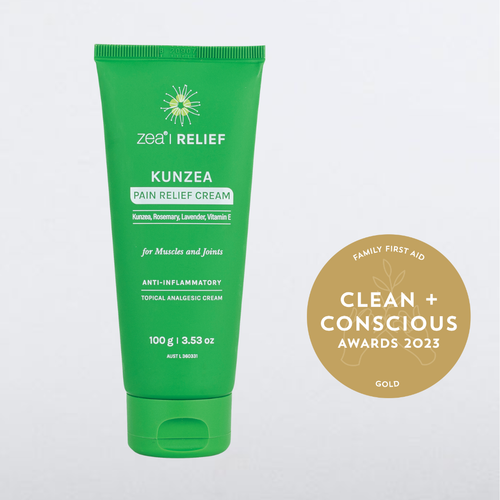
| Worked Zea example | Magnesium Oil Topical Spray and our single-origin essential oils | Kunzea Pain Relief Cream, AUST L 360 331 | A topical anti-inflammatory containing diclofenac (category example, not a Zea product) |
Worked example 1: Kunzea Pain Relief Cream, a listed medicine

Kunzea Pain Relief Cream is registered with the ARTG as a listed medicine, AUST L 360 331. Its sponsor, Australian Kunzea Pty Ltd, has certified that it meets the relevant safety, quality and efficacy requirements, and it's built entirely from the Permissible Ingredients Determination: Kunzea ambigua leaf oil, lavender oil, mixed tocopherols and a rosemary leaf extract, each present at a set concentration on the public record.
What it's permitted to claim is drawn directly from the Permissible Indications Determination, certified by the sponsor for this specific listing. As an analgesic and anti-inflammatory, the certified indications include relief of mild rheumatic aches and pains, symptoms of mild arthritis, mild joint pain and soreness, and muscle sprain, strain and soreness. Two indications worth naming specifically, because they surprise people who assume natural pain products can't touch nerve-related pain: the listing also permits relief of mild nerve pain/neuralgia and symptoms of mild sciatica. Every one of these carries the same restriction built into the listing itself - "mild" is doing real regulatory work in that sentence, and the listing does not extend to more serious joint disease, chronic conditions or anything beyond the specific wording certified.
Worked example 2: Zea's magnesium range and essential oils, sold as cosmetics

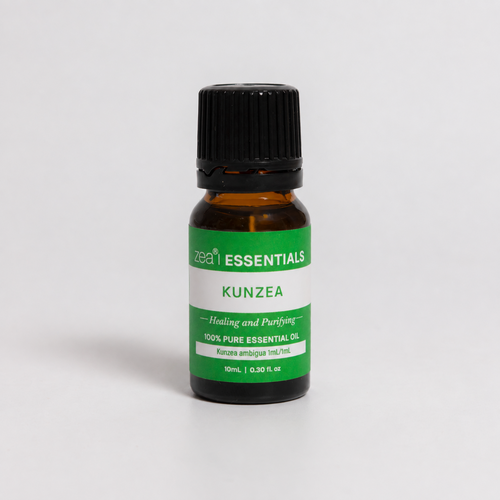
This is the part worth stating plainly rather than hedging around: our magnesium oil range and our single-origin essential oils are sold as cosmetics. They carry no AUST number, because they are not entered on the ARTG at all, and they carry no therapeutic claims. We describe what these products physically are and how people use them - a topical magnesium oil for massage into skin, a single-origin essential oil for diffusing or diluted topical use in aromatherapy practice - without describing a medical effect, because that description would legally require the product to be a registered or listed medicine instead.
That's not a smaller or lesser version of the same story we tell about Kunzea Pain Relief Cream. It's a genuinely different product category, with a genuinely different set of things it's allowed to say, and we'd rather say that outright than blur the line with soft, deniable wording that implies more than the product's regulatory status actually supports.
Why the wording matters more than it seems to
None of this is pedantry. The category a product sits in is the whole reason a shopper can trust a claim on the label at all. "Registered medicine" tells you the TGA has actually reviewed the efficacy evidence. "Listed medicine" tells you the ingredients and the claim wording both come from a pre-approved, low-risk list, and that the sponsor is legally accountable for the evidence behind it - even though the TGA hasn't personally checked that evidence before the product went on sale. "Cosmetic" tells you no therapeutic claim is being made at all, however the marketing might read.
Confusing any of these - a cosmetic dressed up to sound like a medicine, or a listed medicine described as "TGA approved" when it never went through TGA pre-market efficacy review - isn't just imprecise language. It's the exact gap where genuine misunderstanding happens, on both sides of the counter. Knowing which of the three tiers a product actually sits in is the fastest way to read any label accurately, ours included.
Frequently asked questions
Is a listed medicine (AUST L) less effective than a registered medicine (AUST R)?
Not necessarily - the tiers are sorted by risk and evidence pathway, not by how well a product works. A listed medicine is restricted to lower-risk ingredients and pre-approved, lower-level claims, and its efficacy evidence is certified by the sponsor rather than reviewed by the TGA before sale. A registered medicine has been through full TGA evaluation before it reaches the shelf. Both can genuinely work; they've simply been checked in different ways and are permitted to say different things.
Can I check a product's ARTG listing myself?
Yes. The ARTG is a public register, searchable by product name, sponsor, active ingredient or AUST number.4 Searching Kunzea Pain Relief Cream's AUST L 360 331 will bring up its full public summary, including every ingredient and every certified indication.
Is it accurate to say a listed medicine is "TGA approved"?
No. "TGA approved" and "TGA listed" both imply the TGA reviewed the product's evidence before it went on sale, and for a plain listed medicine, it did not - the sponsor certified it instead. The accurate phrase is "registered with the ARTG as a listed medicine," with the AUST L number stated alongside it.
Why don't Zea's magnesium products and essential oils have an AUST number?
Because they're regulated as cosmetics, not therapeutic goods, and cosmetics aren't entered on the ARTG. They can be genuinely useful products - a magnesium oil for massage, a pure single-origin essential oil for diffusing or aromatherapy - without making a claim that would require therapeutic-goods registration.
Where to check the details for yourself
If you want to understand exactly what any AUST L number means and how a listing actually gets onto the ARTG, our companion piece, What AUST L Numbers Mean and How ARTG Listing Works, walks through the ARTG entry process step by step. For the ingredient side of the essential oil story specifically, see How Essential Oil Purity Is Verified, and for a closer look at how a listed medicine's certified indications apply to a specific condition, see Is Magnesium Cream Good for Arthritis?. General questions about our products and their regulatory status are also covered on our FAQ page.
Browse Kunzea Pain Relief Cream, our listed medicine, AUST L 360 331, or our arthritis pain relief cream range. For our cosmetic-category products, see Magnesium Oil Topical Spray and our single-origin essential oils.
References
Sources open in a new tab so you do not lose your place.
- 1. Therapeutic Goods Administration (TGA), Australian Government Department of Health, Disability and Ageing. "Determining if your product is a cosmetic or therapeutic good." Published 1 June 2024, last updated 3 July 2026. View source
- 2. Therapeutic Goods Administration (TGA), Australian Government Department of Health, Disability and Ageing. "Listed medicines." Last updated 15 November 2023. View source
- 3. Therapeutic Goods Administration (TGA), Australian Government Department of Health, Disability and Ageing. "About registered complementary medicines." Last updated 17 November 2023. View source
- 4. Therapeutic Goods Administration (TGA), Australian Government Department of Health, Disability and Ageing. "Search our product register (ARTG)." Public Australian Register of Therapeutic Goods search tool. View source